Black and grey realism vs. full color realism tattoos—which actually last longer? Let’s talk about it.
Text ‘PHO’ to (702) 297-6079 or email robert@robertpho.com to start your consultation.
Key Takeaways
- Black and grey realism ages more predictably than color realism in almost every skin type
- Color realism is technically demanding and fades faster without strict aftercare and sun protection
- Healed work—not fresh photos—is the only honest way to evaluate an artist’s longevity
- Skin tone, sun exposure, and placement affect how both styles hold over time
- The best realism tattoo is the one executed correctly—style alone doesn’t save bad technique
- Reference quality matters just as much as the style you choose
- Choosing the wrong artist is a bigger risk than choosing the wrong style
The Question I Get Before Almost Every Large Piece
Before someone commits to a full sleeve or a large portrait, there’s usually one question I hear more than any other.
Which lasts longer—black and grey realism or color realism?
It’s a fair question. It’s actually the right question to ask before you sit down for something that’s going to live on your body for the rest of your life.
And I’m going to answer it honestly. Not to sell you on one over the other. But because after doing this for over two decades—working in both styles, watching healed work across hundreds of clients—I’ve seen what holds and what doesn’t.
Here’s what I know.
Why This Question Matters More Than People Realize
Most people think they’re asking about aesthetics.
They’re actually asking about permanence.
A realism tattoo—whether black and grey or color—is one of the most technically demanding things you can put on your body. It requires a level of precision that other styles can hide from. You can obscure a mistake in a tribal piece. You can lean into imperfection in neo-traditional. But realism exposes everything.
That’s why the question of longevity isn’t just about the ink. It’s about how the tattoo was built. How the skin was worked. How the artist understood what was coming years down the road.
When someone asks me about black and grey realism tattoo vs color realism which lasts longer, what they’re really asking is: what am I actually committing to?
That’s the conversation worth having.
What Makes a Realism Tattoo Age Well (Or Not)
Before I get into the comparison, there are a few things that affect both styles equally.
Skin is not a static canvas.
It moves. It stretches. It thins over time. Ink spreads. The body metabolizes pigment at different rates depending on where you are, how much sun you get, how you take care of your skin.
These factors don’t discriminate between black and grey and color. They affect everything.
What does change between the two styles is how forgiving they are when the skin does what skin does.
That’s where the real difference lives.

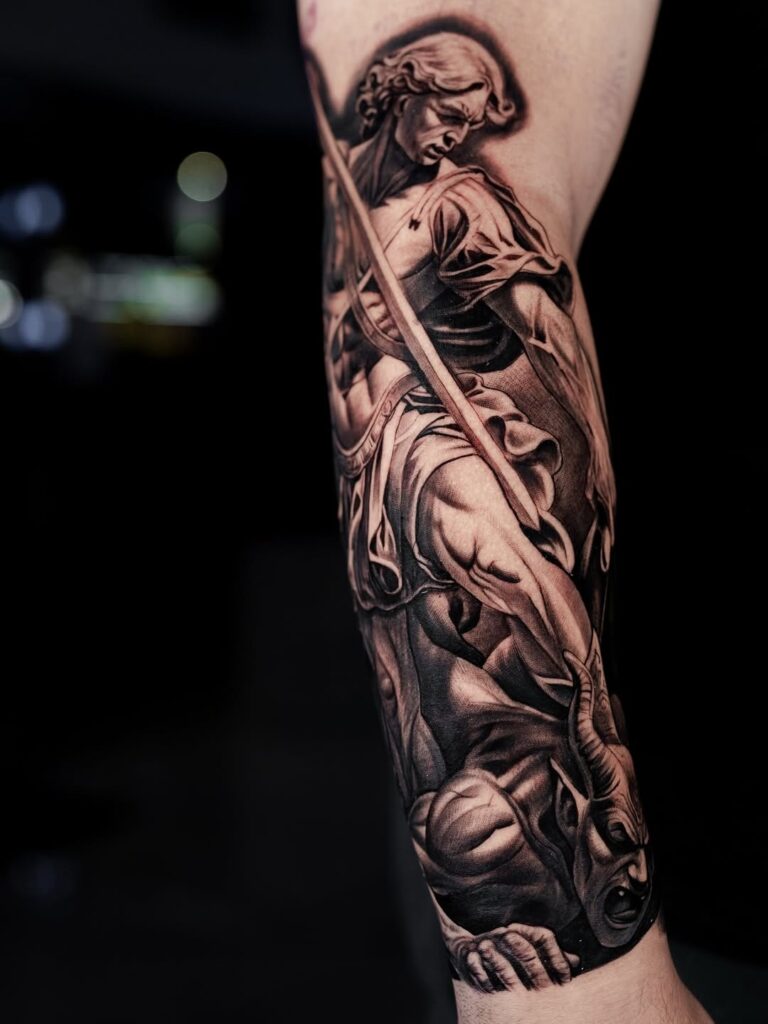
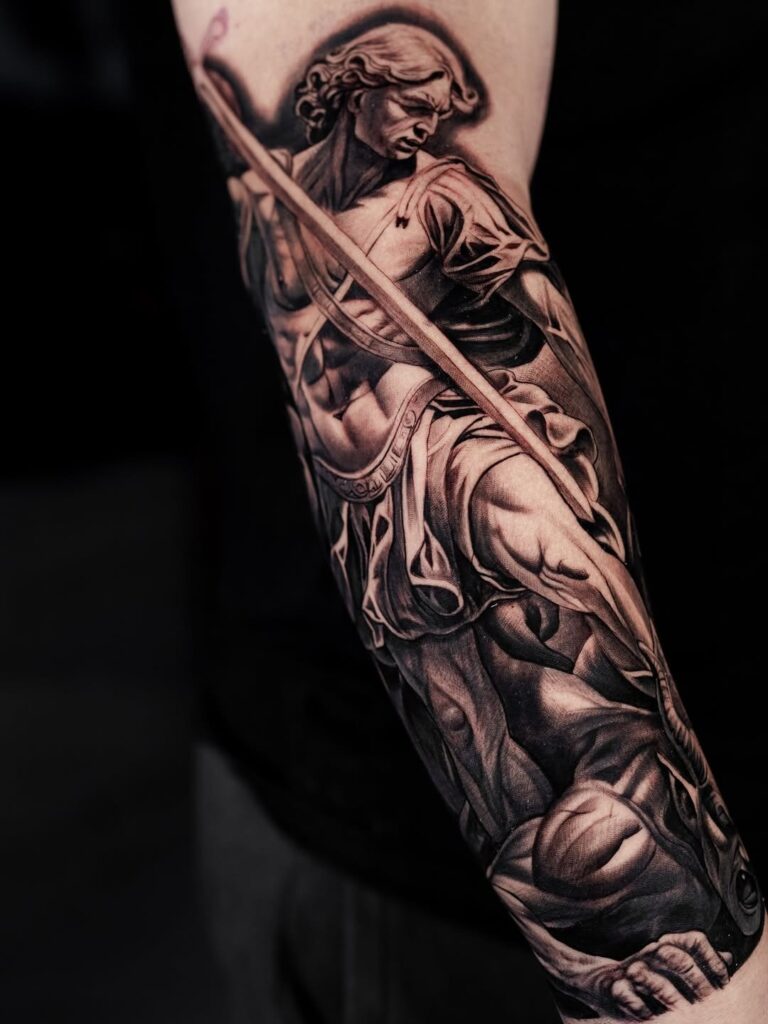
Black and grey realism Saint Michael tattoo I did in my Vegas tattoo shop—text ‘ROBERT’ to (702)-297-6079 or email robert@robertpho.com for a free consultation
Black and Grey Realism: Why It Holds the Standard
I’ll be honest with you.
When I’m working on a large-scale realism piece—especially a portrait—black and grey is my default recommendation. Not because it’s easier. It’s not. But because it gives me the most control over what that tattoo is going to look like in ten, fifteen, twenty years.
Here’s why.
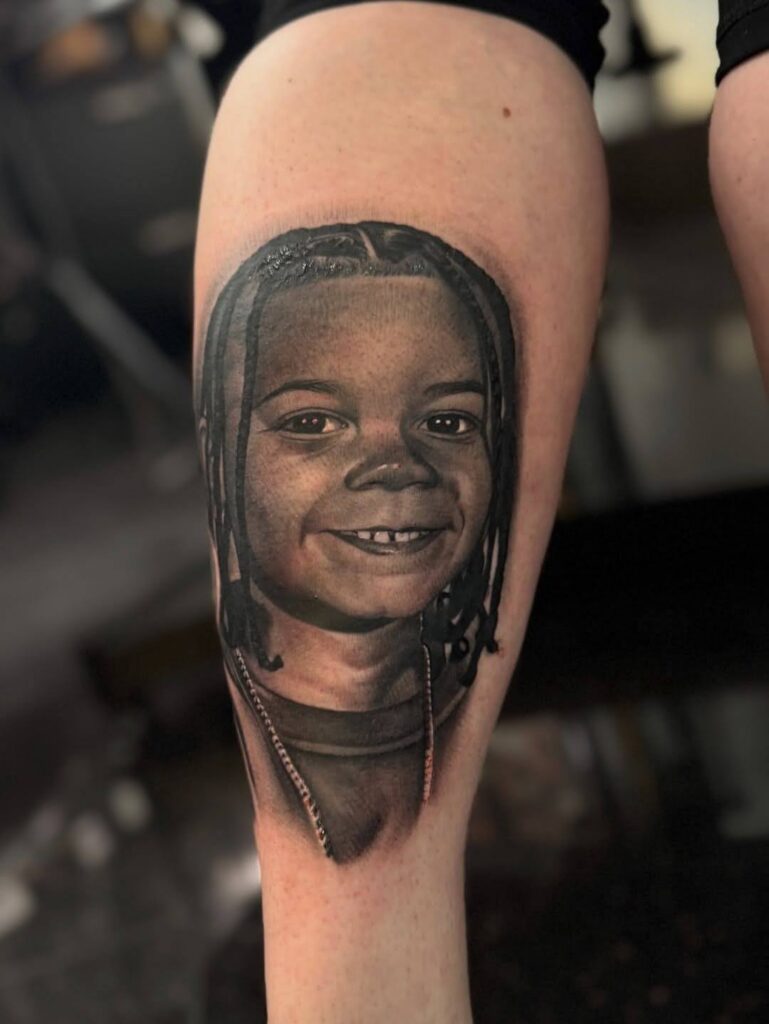
Ready to get started on your own custom, portrait tattoo? Explore my portfolio here & check out my work on Instagram here: @robert_pho
The pigment base is simpler. Black ink, diluted with distilled water at various ratios, creates a range of grey tones. That dilution—not layering of multiple colors—is what produces depth and dimension in black and grey work. Fewer pigments in the skin means fewer variables when the body starts breaking ink down over time.
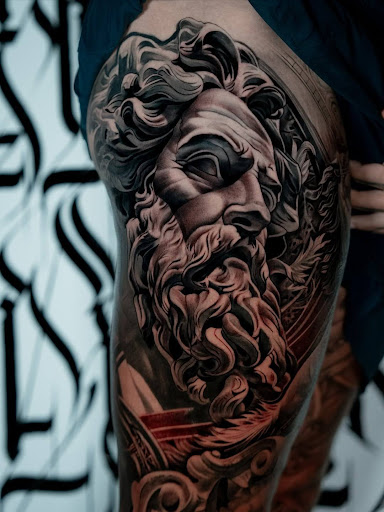
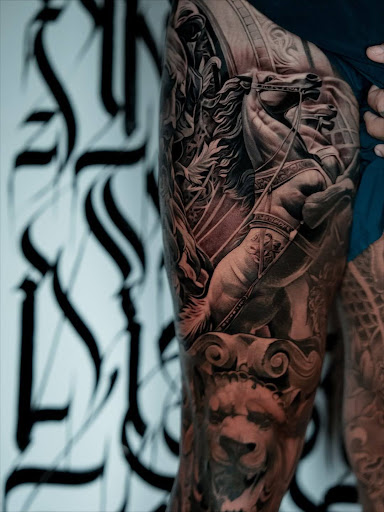
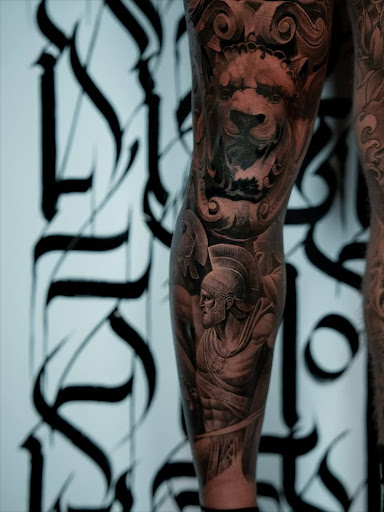
The contrast logic is more predictable. In black and grey realism, you’re working with a controlled value range—dark to light. As the tattoo heals and matures, that contrast settles in a way that can actually enhance the piece. The shadows deepen naturally. The transitions soften in a way that reads as intentional. When it’s done right, a healed black and grey realism tattoo looks like it belongs on your skin.
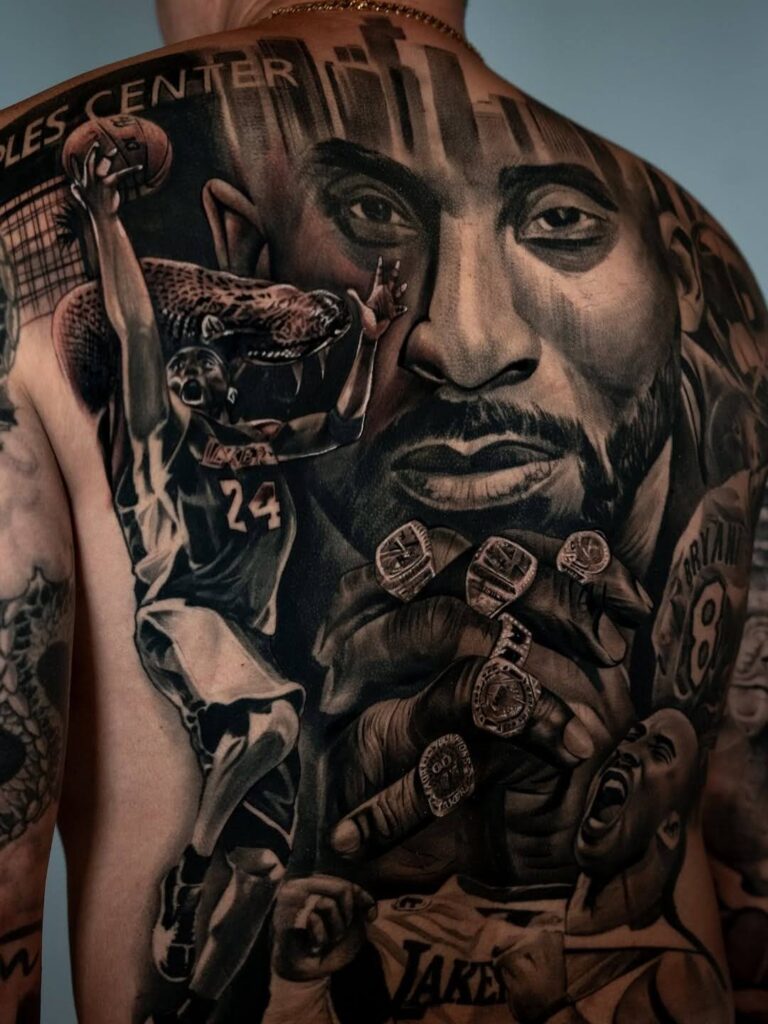
Sun damage hits differently. UV exposure is one of the biggest enemies of any tattoo. But color pigments—especially yellow, light blue, and white—are far more vulnerable to sun damage than black. A black and grey piece under the same conditions will hold its structure longer.
This is why the majority of serious portrait work and large-scale realism is done in black and grey. It’s not just an aesthetic preference. It’s a decision based on longevity.
Color Realism: What It Can Do and What It Costs You
Color realism is extraordinary when it’s done right.
I mean that. The depth you can achieve—the way warm and cool tones interact, the way you can replicate the exact color temperature of a photograph on skin—it’s one of the most impressive things that exists in tattooing right now.
But it comes with tradeoffs.
Color realism is more technically demanding. You’re not just managing value. You’re managing hue, saturation, temperature, and the way different pigments interact with each other and with the skin. If the color balance is slightly off during the session, it shows. Not right away—but it will show.
The pigment selection matters enormously. Not all color pigments are created equal. Some are formulated to last. Some aren’t. And the problem is, you won’t know the difference until the tattoo has been healing for a couple of years. Cheap ink fades fast. The wrong white applied too aggressively will heal out in months.
Aftercare requirements are stricter. A color realism tattoo requires consistent sun protection for life. Not just the first few weeks. Every time you’re in the sun, you’re pulling color out of that piece if it’s exposed. Most people aren’t going to maintain that level of discipline indefinitely. That’s not a criticism—it’s reality.
Touch-ups are more common. I’ll tell you the truth: color realism pieces almost always need a touch-up or refresh at some point. Black and grey doesn’t always need that. The nature of color pigment in skin is that it shifts. Reds can pull orange. Blues can pull green. Greens can fade yellow. If you’re not prepared for occasional maintenance, color realism might not be the right commitment.
The Real Answer: Black and Grey Realism Lasts Longer in Most Cases
When you’re asking about black and grey realism tattoo vs color realism which lasts longer, the straight answer is this:
Black and grey realism holds longer, more predictably, across more skin types and lifestyle conditions than color realism does.
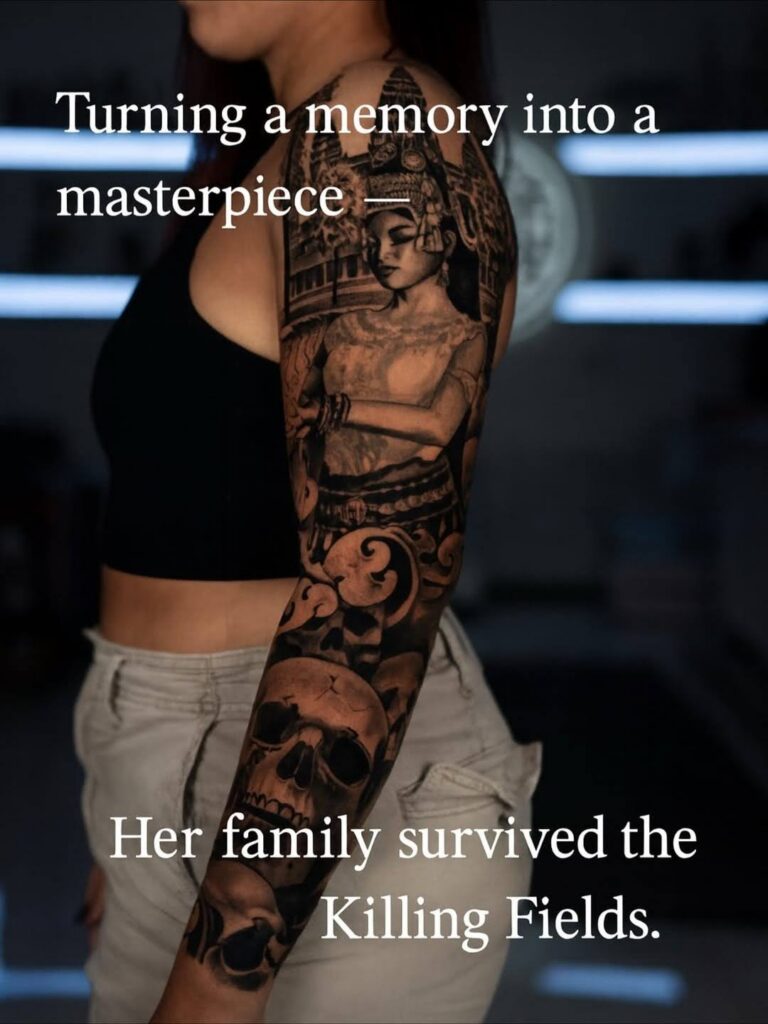

Tattoo rework I did for a client whose family survived the Killing Fields of Cambodia—much like my own family, many of whom didn’t make it out
That’s not an opinion. That’s what you see when you look at healed work over time.
But “longer” doesn’t mean forever, and it doesn’t mean automatically. Black and grey realism that was overworked, poorly saturated, or placed wrong ages just as badly as any color piece. Technique still matters more than the style.
What black and grey gives you is margin for error. On the client side and the artist side.
Color realism gives you almost none.
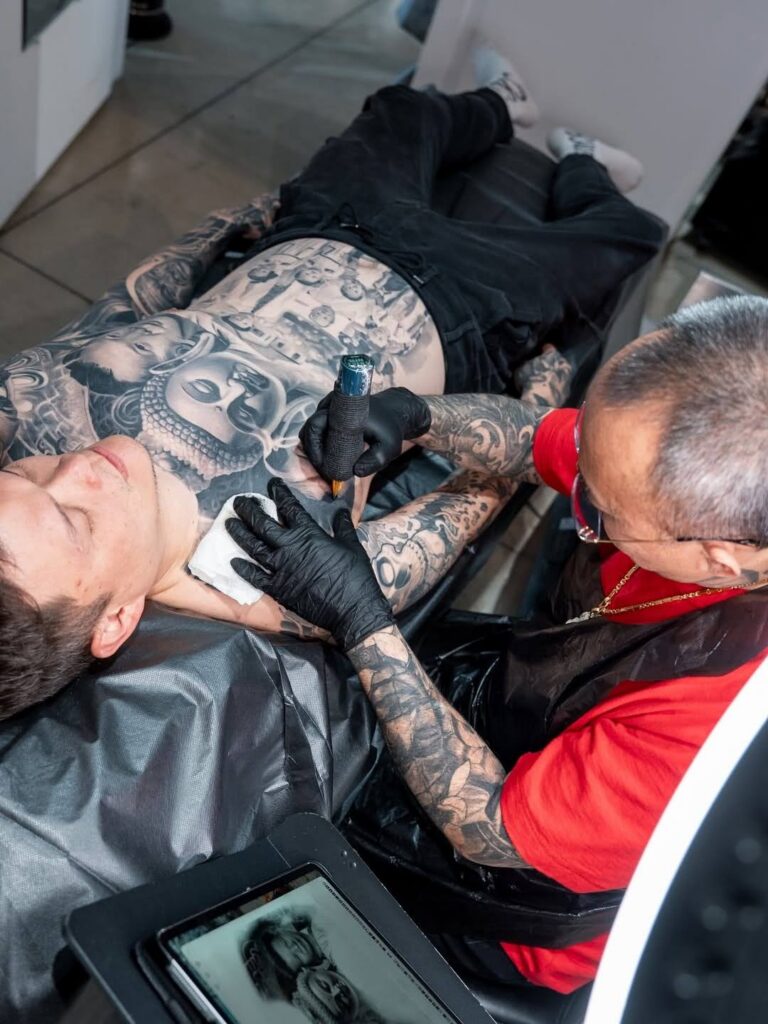
Text ‘ROBERT’ to (702)-297-6079 or email robert@robertpho.com for a free consultation
How Skin Tone Factors In
This is something I want to address directly because it matters and most people don’t talk about it.
Skin tone affects how both styles read—and how they age.
For lighter skin tones, color realism can produce stunning results. The lighter pigment base allows color to show through more clearly, especially warmer tones.
For deeper skin tones, color realism is significantly more challenging. Colors read differently, lighter tones don’t pop the same way, and the aging process can be less predictable. Black and grey on darker skin, when done correctly, can be absolutely striking—because contrast and depth are your primary tools and they work with the skin instead of against it.
This isn’t about limitation. It’s about working with what’s there. A skilled realism artist knows how to adjust their approach based on the person in the chair—not just what the reference photo looks like.
What I Tell My Clients Before They Decide
When someone comes to me trying to decide between the two styles, I don’t push them either way before I understand a few things:
What’s the subject matter? Portraits of people almost always read better in black and grey. There’s a reason for that—it’s the language most associated with memory, permanence, emotion. A memorial portrait in color can feel jarring in a way that black and grey doesn’t.
If the subject is something that actually requires color to communicate—certain animals, nature elements, hyper-realistic eyes with specific color detail—then color might be the right choice. But the decision should come from the image, not just personal preference.
What’s your lifestyle? If you work outdoors, spend time in the sun regularly, don’t use SPF on your tattoos—color realism is going to fight a losing battle. I’d rather you have a piece that works with your life than one that fades out because the conditions weren’t right.
Are you prepared for maintenance? Color realism may need touch-up work. Black and grey, built correctly, often doesn’t. If you want to put it down and not come back for years, black and grey is the more reliable choice.
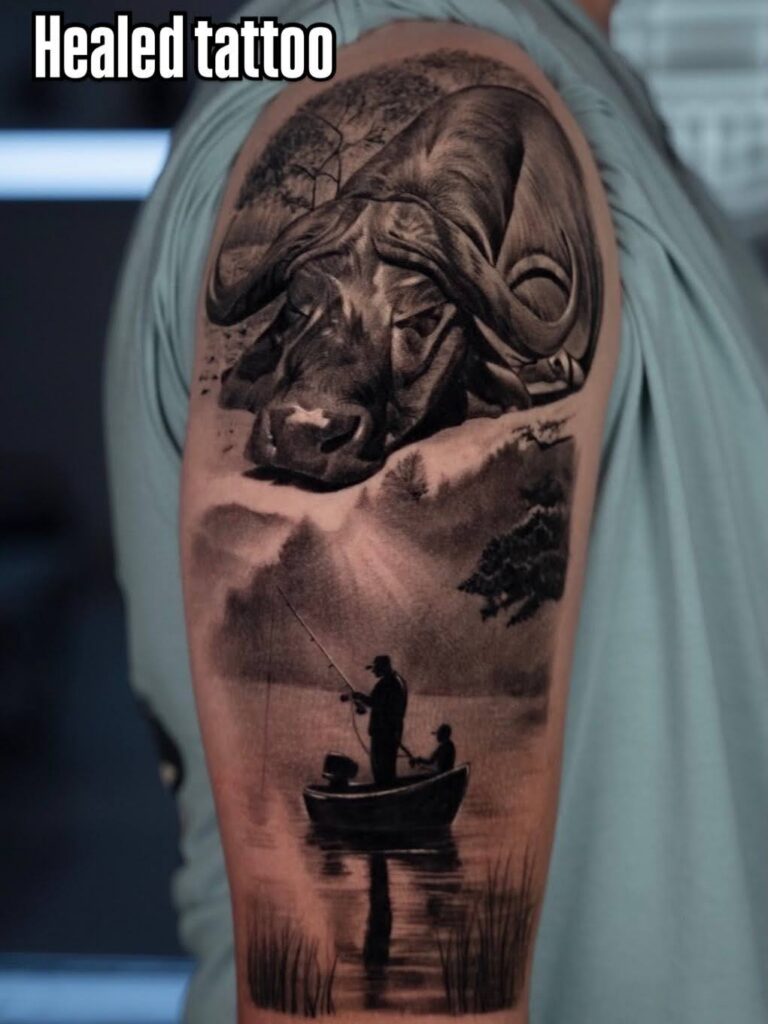

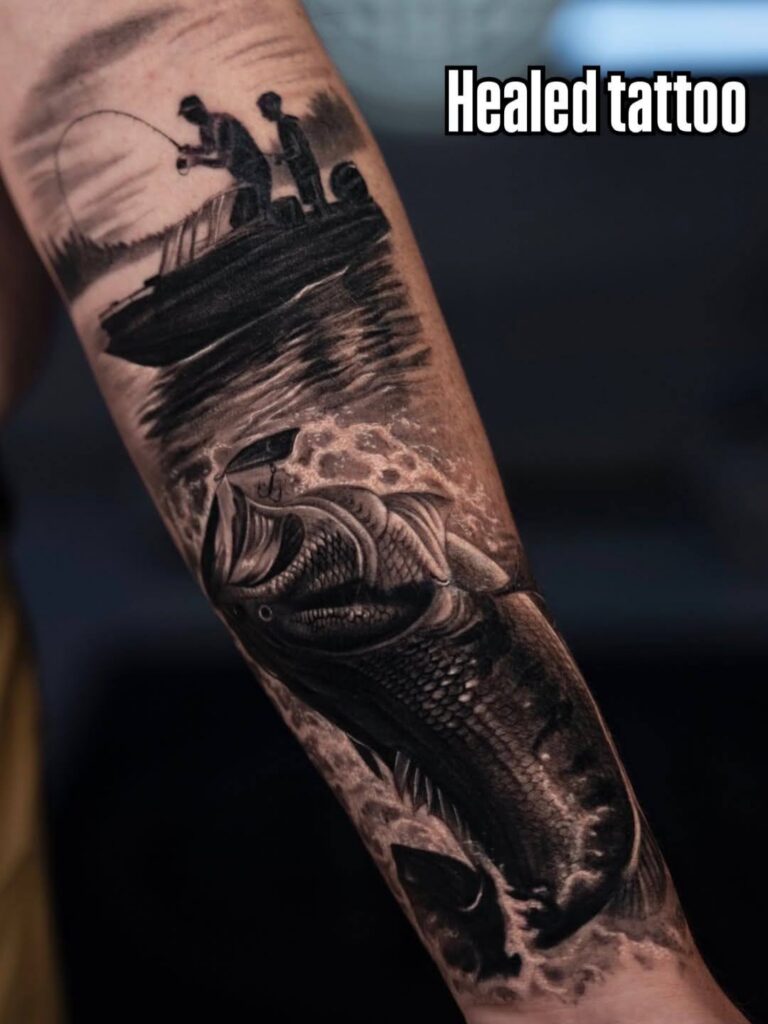
Healed father and son tattoos depicting their favorite family memories hunting and fishing
What does the healed work look like? This is the most important question of all, and it applies to the artist, not just the style. If someone can’t show you healed color realism that still reads clearly and holds contrast—years after the tattoo was done—then they’re not the right person for a color piece, regardless of how impressive the fresh work looks. Same goes for black and grey. Fresh looks good. Healed tells the truth.
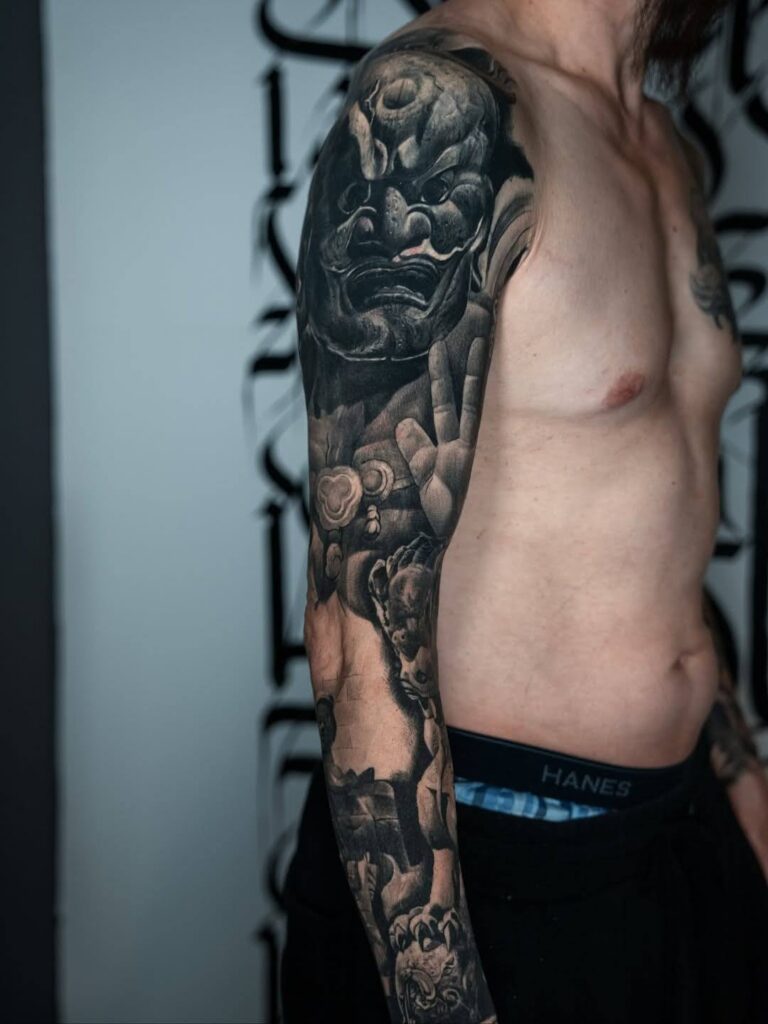

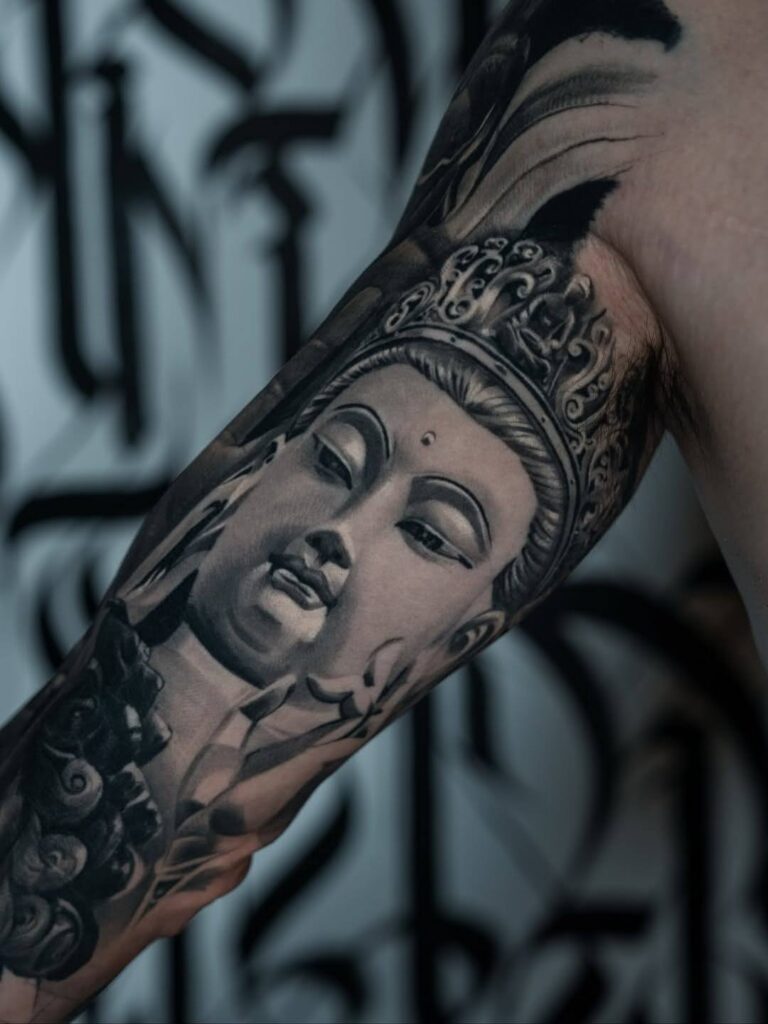
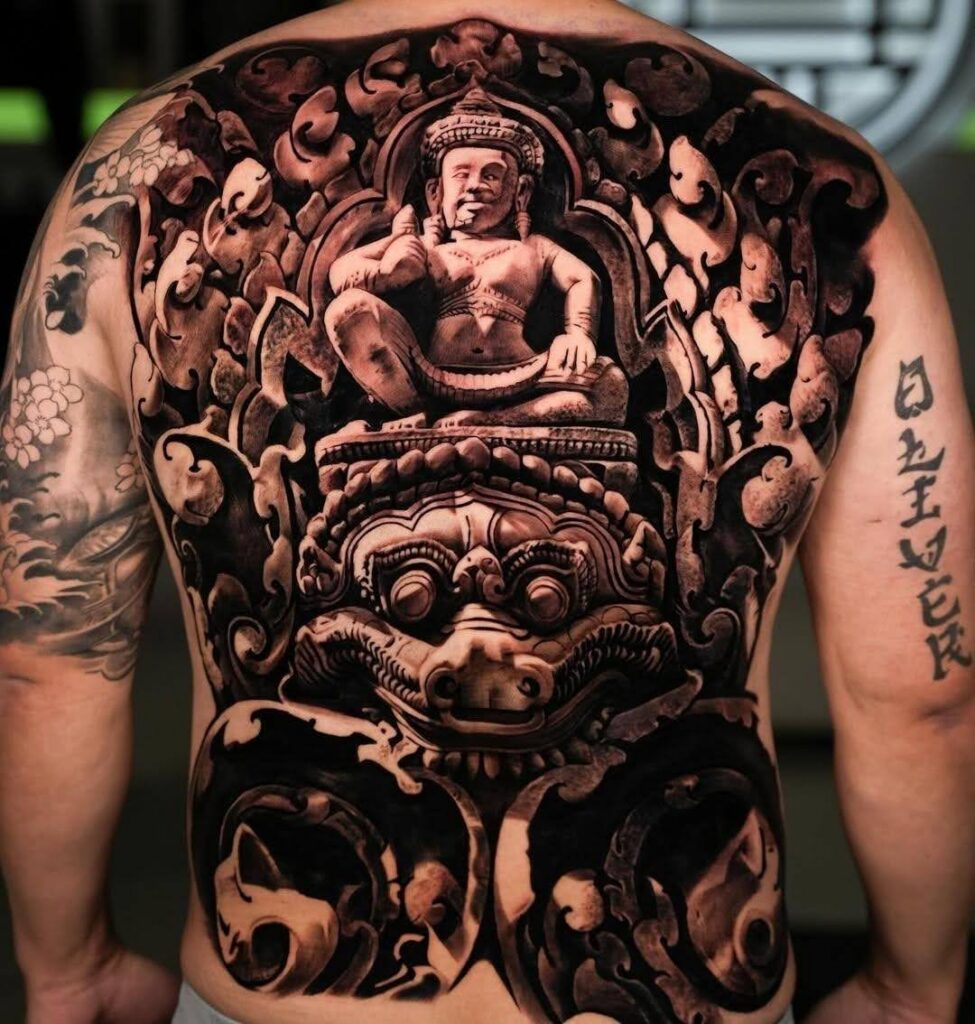
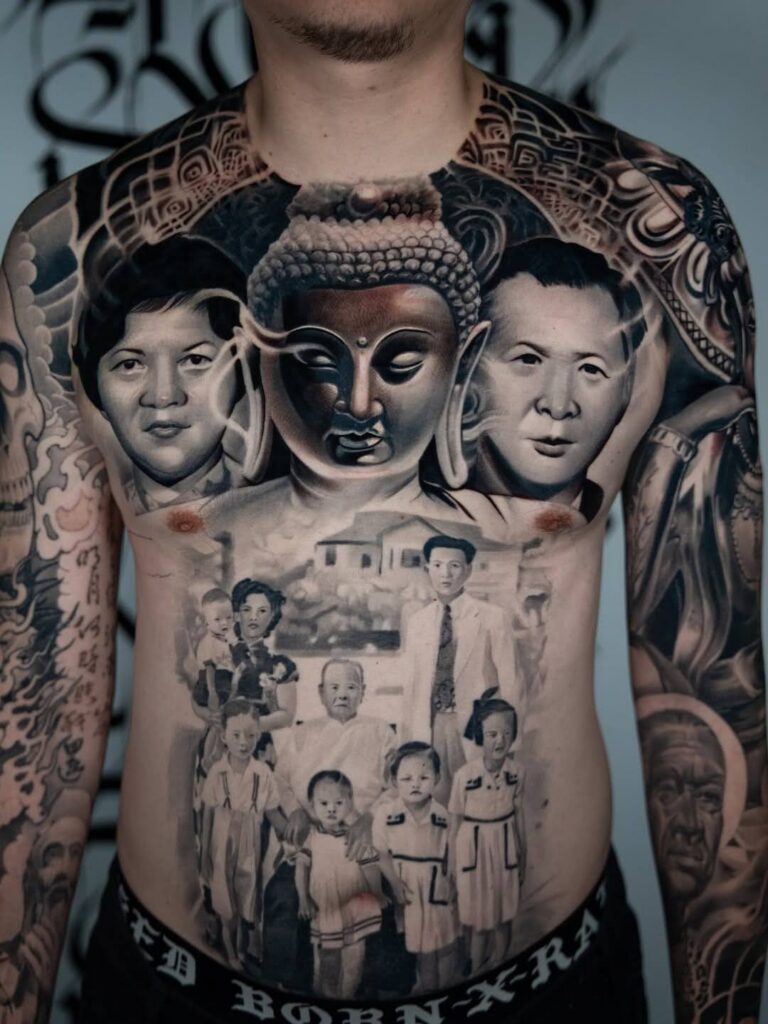
Healed, Buddhism inspired black and grey realism arm sleeve done at Skin Design Tattoos Las Vegas tattoo shop
Why I Built My Career on Black and Grey Realism
I’ve worked in both styles. I understand color. I can execute color realism at a high level.
But I built my reputation on black and grey realism for a reason.
It’s the most honest medium I’ve found for the kind of work I care about most—portraits, memorials, pieces that carry real weight. The subjects I tattoo most often are people who matter. A father. A daughter. A person who didn’t make it. A memory that someone is carrying for the rest of their life.
That kind of subject demands a certain permanence. A certain seriousness.


Black and grey gives me that. It ages with the person. It settles into the skin like it was always there.
Color can be beautiful. But for the kind of realism I specialize in—the kind that has to hold up emotionally and technically over time—black and grey is where I trust myself most. And more importantly, it’s where I trust the work.
That’s the standard I hold to.
Bottom Line
Black and grey realism tattoo vs color realism which lasts longer:
Black and grey wins on longevity in almost every case. It’s more predictable, more forgiving to different skin types and lifestyles, and it holds its structure and depth better over time.
Color realism is capable of extraordinary results—but it requires the right artist, the right subject matter, the right aftercare, and the right client. When all of those things align, it can be breathtaking. When any one of them is off, you feel it in two years.
The deeper truth is this: the style is secondary to the execution. A poorly built black and grey piece will fall apart just like a poorly built color piece. What you’re actually choosing when you pick an artist isn’t just a style. It’s a philosophy. A discipline. A set of decisions that are made before the machine ever touches your skin.

Ready to get started on your own custom tattoo? Explore my portfolio here & check out my work on Instagram here: @robert_pho
That’s what you’re really paying for.
Ready to Talk Through Your Piece?
If you’re weighing this decision for a large realism project—portrait, sleeve, memorial—I want to hear about it.
Text ‘PHO’ to (702) 297-6079 or email robert@robertpho.com to start the conversation.
We’ll go through the reference, the placement, the style, and what’s going to hold up for the long term. No pressure. Just clarity.
Frequently Asked Questions
Does black and grey realism age better than color realism?
In most cases, yes. Black and grey realism ages more predictably because it relies on a simpler pigment base. The contrast settles naturally over time, and the style is less vulnerable to UV damage and lifestyle factors than color realism. That said, technique matters more than style—a poorly executed black and grey piece will still age badly.
Can color realism tattoos last as long as black and grey?
They can, but they require more maintenance. Color realism is more sensitive to sun exposure, skin type, and the quality of pigments used. With consistent sun protection and occasional touch-ups, a well-executed color piece can hold up for a long time. But the margin for error is much smaller than with black and grey.
What is the hardest color to keep in a realism tattoo?
Light colors—especially whites, light yellows, and pale blues—fade fastest. These pigments are the most vulnerable to UV exposure and tend to blur into the surrounding skin over time. Any color realism piece that relies heavily on light tones will require more care and is more likely to need a refresh.
Does skin tone affect how long a realism tattoo lasts?
Yes. Skin tone affects both how the colors read and how they age. Color realism on deeper skin tones can be unpredictable because lighter pigments don’t show through as clearly and can fade inconsistently. Black and grey tends to be more reliable across a wider range of skin tones when executed correctly.
How often does a color realism tattoo need a touch-up?
It depends on placement, aftercare, and the quality of the original work. Many color realism pieces benefit from a touch-up at the two-to-five year mark. Black and grey realism, when built with the right contrast and saturation, often doesn’t need one. This is something to discuss with your artist before committing to a style.
What should I look for in a realism tattoo artist for longevity?
Healed work. That’s the only real proof. Ask to see tattoos that are at least two years old—ideally older. Look for whether the contrast held, whether the gradients stayed smooth, whether the likeness is still clear on portrait pieces. Fresh tattoos look good on almost everyone. Healed work separates the artists who build correctly from the ones who don’t.
Is black and grey realism better for portraits?
For most portrait subjects—especially memorials and family portraits—yes. Black and grey is the natural language for that kind of work. It reads as timeless, emotionally serious, and it ages in a way that enhances the piece rather than fighting it. Color portraits can work, but the subject matter and reference quality need to strongly support it.